
Distance control is crucial for approach shots. Even if you’ve practiced hitting 20, 30, and 40-yard shots at the range, you may still overshoot the pin on the course. The culprit is often a flawed practice method.
Aim 5 Yards Short of the Sign
Most driving ranges have signs or greens at distances under 50 yards. Many amateur golfers target these signs to improve their feel for distance. However, this direct approach doesn’t always translate to better short game performance because it only teaches you carry distance.
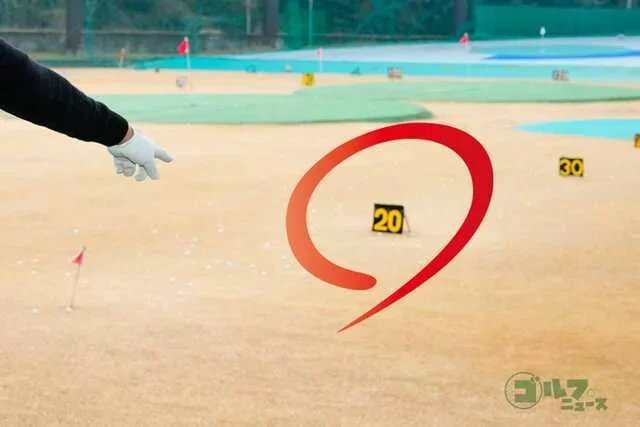
Practicing carry distance at the range often fails you on the course. (Photo: Suzuki Sho)
Imagine you’re left with a 20-yard shot to the pin during a round. You think, “I’ll just hit it like I do at the 20-yard sign.” What happens? Depending on the ball flight, you’ll likely overshoot by 5, 7, or even 8 yards because the ball rolls after landing on the green.
To avoid this, aim to land the ball about 5 yards short of the sign at the practice range.
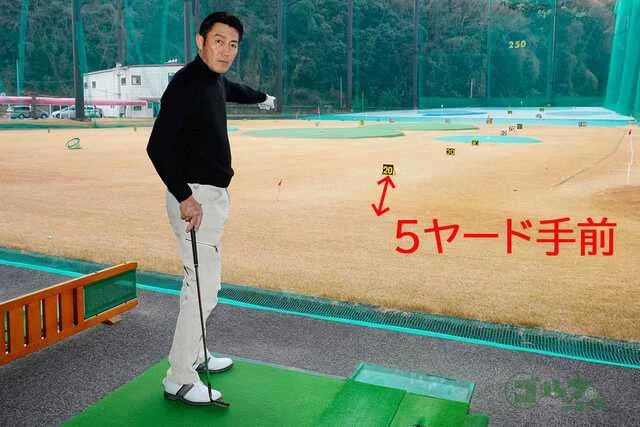
When targeting a range sign or green, aim to land the ball 5 yards short. (Photo: Suzuki Sho)
For a 20-yard shot, land it at 15 yards; for 30 yards, land it at 25 yards; for a 50-yard green, land it 45 yards short of the pin. This mindset will help prevent overshooting on the course.
Open Your Stance by Pivoting on Your Heels
While swing length adjusts distance, it’s essential to maintain consistent rhythm and swing tempo. Even if your swing length is constant, different rhythms or mechanics can create distance variations. Amateurs often rely on “hand-only” swings, which disrupt rhythm and consistency.
A simple adjustment in your stance can help. Start by setting up square with both feet and the ball centered. Then, using your heels as a pivot, turn both toes slightly to the left. This creates an open stance, making it easier to rotate your body toward the target on the follow-through.
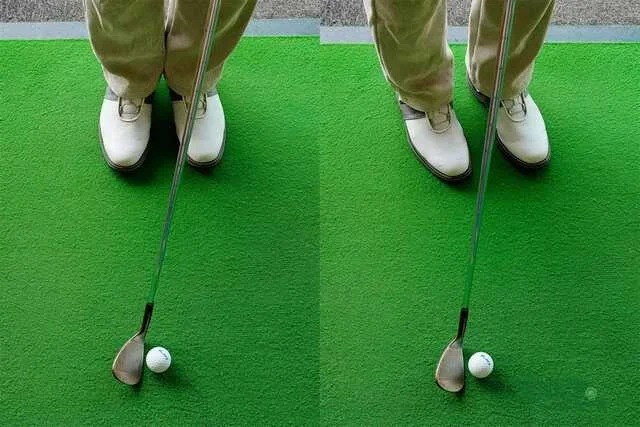
From a square stance, pivot on your heels to rotate both toes left. An open stance promotes body rotation on the follow-through. (Photo: Suzuki Sho)
Without sufficient swing speed in approach shots, the body’s rotation often stops after impact. This leads to hand-dominant swings, resulting in the clubhead digging into the ground or racing past the ball. Such inconsistency ruins your swing rhythm and prevents you from hitting the same shot repeatedly.
An open stance (toes left) allows you to swing the club up and down with body rotation, stabilizing both rhythm and swing. The ball stays on the face longer, improving direction and distance control while adding spin—meaning the ball won’t roll out excessively.
(Cooperation: Peas Links, Hiroshima Prefecture)
【Lesson】
Hiroo Kawai
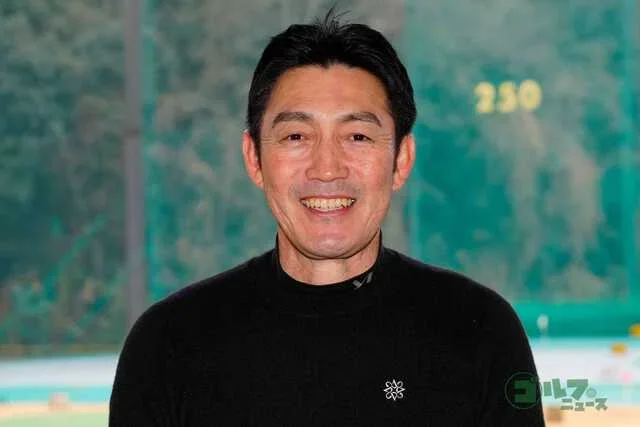
Hiroo Kawai (Photo: Suzuki Sho)
Born November 13, 1971. Passed professional test in 1996, earned first seed in 2000. Studied under Jumbo Ozaki from 2011 and won his first tour title at the Japan Professional Golf Championship that year. Topped the greens-in-regulation ranking twice, known for precise iron shots. Joined senior tour in 2022, earned seed for the following year but retired from tour professional in August 2023. Now works at his family’s meat shop and barbecue restaurant.