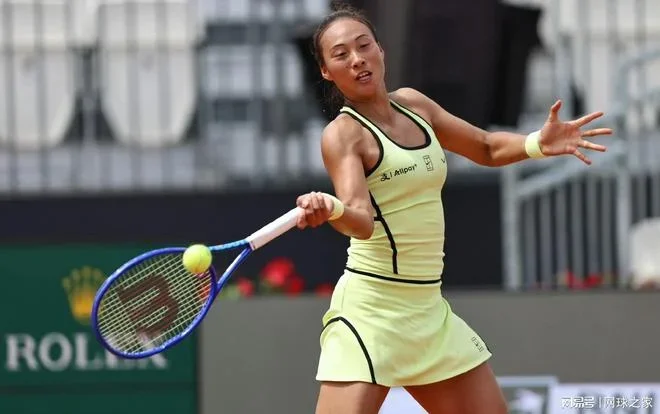
Zheng Qinwen’s third-round exit at the Rome tennis tournament came as a surprise. With a perfect 3-0 head-to-head record against Jelena Ostapenko and playing on her preferred clay surface, the Chinese star ultimately fell 6-4, 4-6, 4-6, failing to advance to the round of 16.
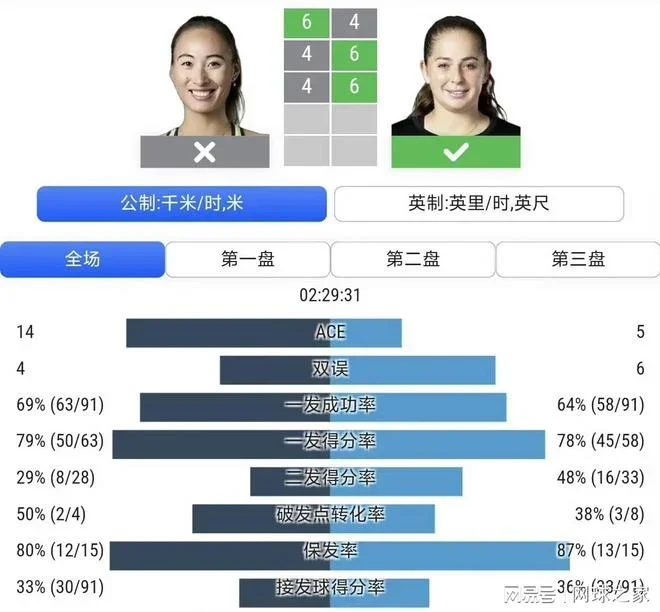
On paper, Zheng’s performance was impressive. She fired 14 aces, posted a 69% first-serve percentage, and won 79% of points on her first serve. She lost only three service games throughout the match. Additionally, Zheng recorded 31 winners against just 12 unforced errors. The glaring weakness, however, was her second-serve win rate—a mere 29%.
Ostapenko, by contrast, produced 43 winners with only 21 unforced errors—a far cry from her usual “erratic” reputation. Her serve was also solid: 64% first-serve percentage, 78% first-serve points won, and just two breaks conceded while holding 87% of her service games—almost a “flashback to 2017” level.
What should we make of this defeat? Let’s examine the perspectives from on and off the court.
**What Zheng Said: Problem with Returns, Blame on Herself**
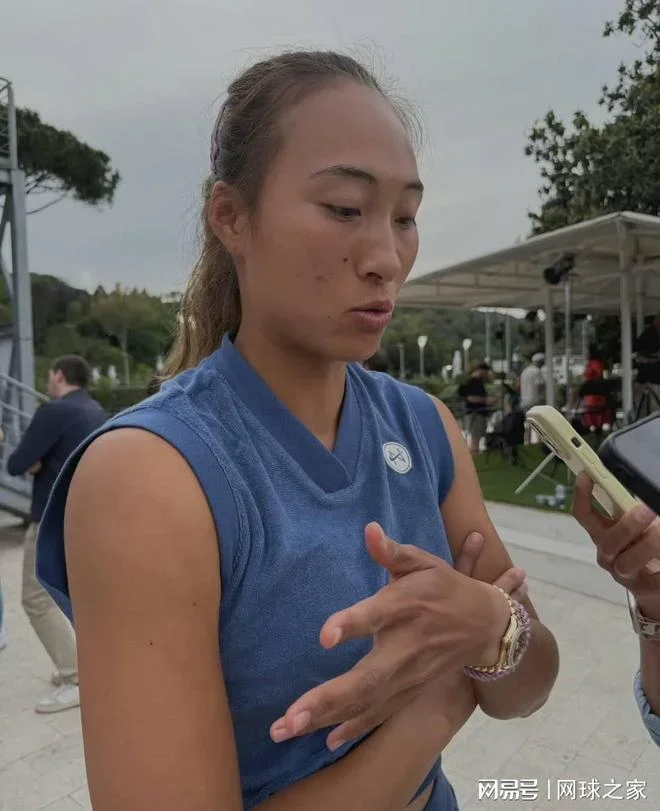
Zheng did not attribute the loss to Ostapenko’s hot streak. In her post-match interview, she was candid: “I think the main reason was actually me. Her style is always the same—win or lose, she never changes. The issue was more on my side; I didn’t handle the return well enough.”
She believes her serve was not the primary cause of defeat, stating that her return of serve was too shallow, allowing Ostapenko to apply pressure. Zheng also acknowledged that Ostapenko’s aggressive second-serve returns created significant psychological pressure.
“She has those three main weapons, and she never changes them against anyone,” Zheng noted. “Whether I win or lose depends on whether I can overcome that hurdle and execute my own game.”
Her message was clear: when your serve is firing but still not enough to cover another weakness, that weakness—the return game—has become a leaking bucket. This isn’t just about “not returning well”; it requires systematic reconstruction of anticipation, positioning, and shot habits.
**Expert Analysis from Three Angles**
A single player’s perspective isn’t enough. Let’s examine the match through expert and data lenses.
**2.1 Ostapenko’s “Swing”**
Ostapenko was on fire. Experts described it as a rare baseline battle on clay, where both players showed strong firepower while keeping unforced errors within reasonable bounds. But Ostapenko’s winners came in bursts, particularly after the second set. Against someone producing 43 winners with fewer than half as many unforced errors, even Sabalenka might have felt daunted.
**2.2 Why Impressive Stats Led to Defeat**
Many fans were puzzled: how can a player with 31 winners and just 12 errors lose? The answer lies in that 29% second-serve win rate. Analysts pointed out: Zheng lost only three service games, thanks to her first serve. But the abysmal second-serve return points won highlighted Ostapenko’s relentless attack on second serves.
In a card game analogy, Zheng held aces (first serves) but her remaining cards (second serve and return) couldn’t form a straight. Ostapenko smartly targeted those weak spots, while Zheng’s return game failed to put pressure, leaving Ostapenko free to load up.
Thus, a data-beautiful loss: Zheng won points too reliant on one weapon, while her losing points were numerous and varied.
**2.3 Poor Decision-Making on Big Points**
At crucial moments, players tend to repeat successful patterns—muscle memory—which opponents exploit as route dependency. Experts noted that in the latter part of the match, Zheng persistently served wide on the deuce side against Ostapenko’s hot forehand, and continued hitting cross-court forehands in baseline rallies. Without tactical variation, these patterns played into Ostapenko’s hands.
Ostapenko’s kryptonite is low, fast, flat shots. But when Zheng needed to change tactics, those options were absent. This wasn’t just about feel; it was about match reading and daring.
**Foreign Media Perspective**
WTA’s official website highlighted a rarely mentioned stat: Zheng’s forehand forced errors numbered 19, while her total unforced errors were only 12. This means Ostapenko wasn’t waiting for Zheng to make mistakes; she was forcing them. That’s a different type of defeat—being outplayed rather than handing the match away.
WTA also noted that Ostapenko’s first-serve win rate in the third set soared to 85%, and she allowed Zheng